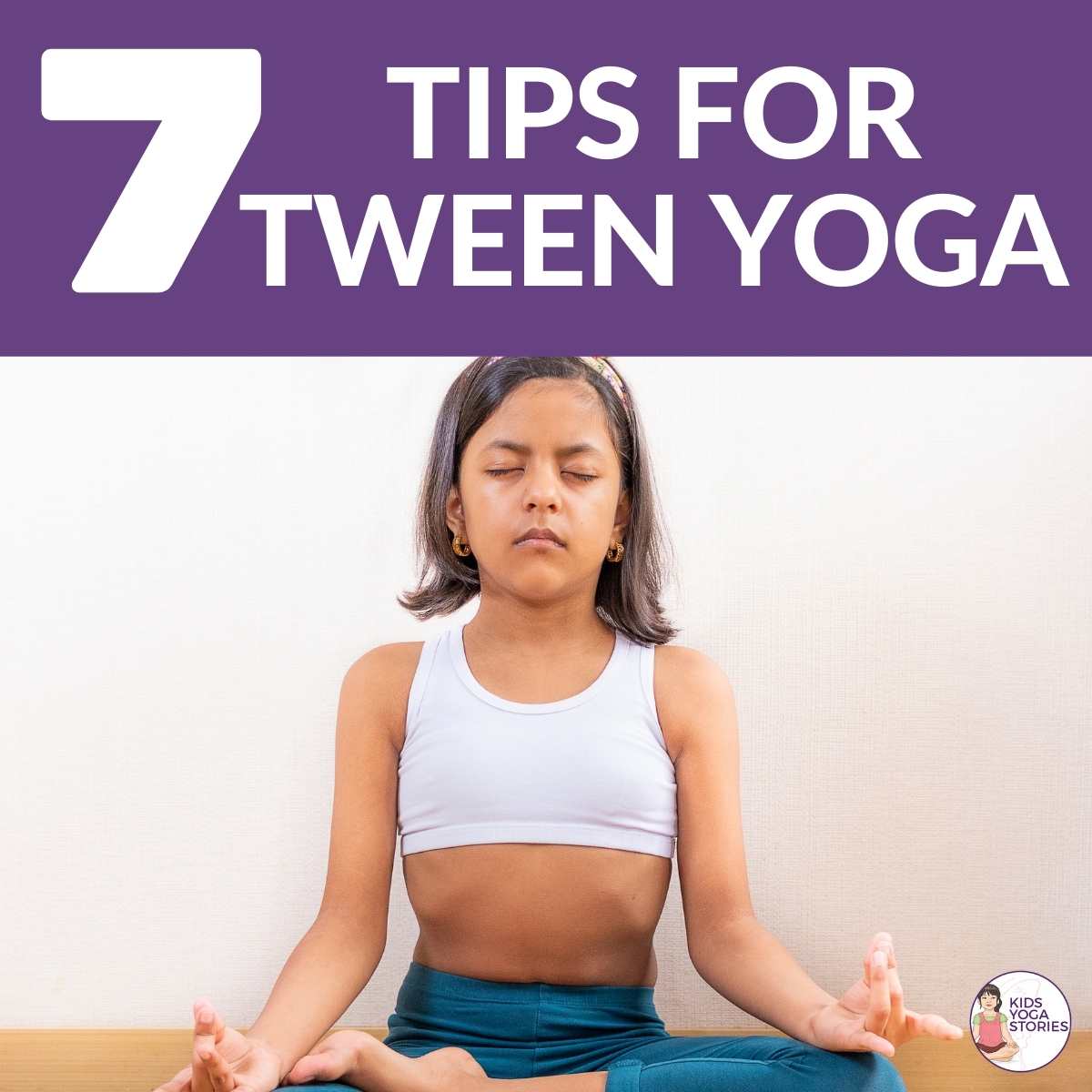
7 Essential Tips for Teaching Tween Yoga (That Actually Work)
Explore 7 essential tips for teaching tween yoga. Learn how to structure classes, create meaningful themes, and support 9- to 12-year-olds with yoga and mindfulness.
“How do I structure yoga classes for tweens?”
“What kinds of activities do 9- to 12-year-olds actually enjoy?”
These are questions we hear all the time from our Kids Yoga Stories community, and for good reason. Tweens are in a unique in-between stage where they’ve outgrown the games and songs that work beautifully with younger children, but they’re not quite ready for a full adult yoga class either.
Teaching this age group can feel tricky. They’re navigating big emotions, forming strong friendships, dealing with school pressures, and starting to figure out who they are. They need yoga and mindfulness tools more than ever, but they also need those tools presented in a way that honors their stage of development.
The good news? When you get it right, tween yoga classes can be incredibly rewarding. These kids are creative, insightful, and ready to dive deeper into the philosophy and practices of yoga in ways that younger children simply can’t.
7 Tips on How to Structure Tween Yoga Classes (Plus the Mistakes to Avoid)
Below, we’re sharing seven essential tips for teaching tween yoga, drawn from expert interviews, successful school programs, and years of experience working with this age group (and having one of my own). Whether you’re a kids yoga teacher, educator, school counselor, or parent bringing yoga to your community, these strategies will help you create classes that tweens are actually excited about.
1. Structure Classes Between Playful and Serious (Find the “Sweet Spot”)
One of the biggest mistakes instructors make when teaching tweens is using the same approach they would use for younger children or for adults. Tweens have outgrown the playful stories, puppet shows, and animal sounds that work so well with preschoolers. They also don’t have the body awareness, coordination, or attention span for a full adult vinyasa flow, though.
So what works? You need to find that “sweet spot” in between.
Claire Louise Smith, co-founder of Ambassador Yoga, discovered this early on when parents at her studio started asking for tween and teen yoga classes.
Claire’s Suggested Class Structure for Tweens:
- Opening: Kickstart your tween yoga class with time to reflect on their week. They can choose comfy bolsters, blankets, or their favorite cozy spot.
- Teaching Lesson: This could be a series of physical yoga postures, complete with explanations of why they’re beneficial. Or it might be a deep dive into specific breathing practices or yoga philosophy, like the Yamas and Niyamas. Take them on a journey of exploration.
- Closing: Wind down with a tranquil resting pose, followed by reflection time. But here’s the best part: sharing stories! Give students space to share their thoughts and feelings. Let their voices be heard. Discover the tapestry of shared experiences.

2. Create Themes That Connect to Their Real Lives
Tweens are at a stage where they’re developing abstract thinking. They can grasp bigger concepts and connect yoga philosophy to their everyday experiences in powerful ways.
This is why themed classes work so beautifully with this age group. Instead of just teaching poses for the sake of movement, give each class a meaningful theme that relates to something they’re actually dealing with.
Here are some themes that resonate with tweens:
- Focus: Building concentration and staying present
- Self-Care: Taking care of their physical and emotional health
- Letting Go: Releasing grudges, stress, or things that no longer serve them
- Gratitude: Appreciating their bodies and lives just as they are
- Empathy: Understanding and caring about others
- Comfort Zone: Growing and trying new things even when it feels scary
Each theme can be paired with a guiding statement. For example, “I can grow outside my comfort zone” or “I let go of what no longer serves me.”
In the middle school yoga unit we developed with Ms. Riddle, a wellness teacher in Massachusetts, we created six themed classes that addressed exactly what her students were struggling with. Each class included a specific breathwork technique, a yoga sequence, and a closing meditation that all tied back to the theme.
Why does this work so well? It fits perfectly because tweens are grappling with friendship drama, school pressure, social media stress, and figuring out who they are. When you connect ancient yoga philosophy like the Yamas and Niyamas to these modern challenges, yoga suddenly becomes deeply relevant to their lives.
3. Prioritize Reflection, Storytelling, and Being Heard
One of the most powerful elements of tween yoga isn’t the physical yoga poses. It’s the space you create for reflection and sharing.
Think about a typical tween’s day. They rush from class to class, sport to sport, activity to activity. Everything is fast paced. They’re rarely given time to pause, process their feelings, or just be heard.
Yoga class can be different.
How to Build This Into Your Classes:
Opening Reflection: Give tweens five minutes at the start of class with reflection pages or journals. They can write or draw. Some prompts that work well include:
- Describe a calm and peaceful moment from your week.
- What’s one thing you’re grateful for today?
- What feeling would you like to bring to class?
- Draw or describe something that’s been on your mind.
“I like giving students the option to sketch and draw, as well, because writing is a source of stress for some students, and art can be a tool to manage stress.”
– Sandra T., Middle School Guidance Counselor
Closing: After your final resting pose, create space for students to share their experience. Ask questions like:
- How was your experience today?
- What came up for you during class?
- Did anything surprise you?
Not everyone will share, and that’s okay. Some tweens are naturally more vocal and will share every single class. Others will sit quietly and listen. But the impact is there for everyone.
This practice of reflection and storytelling does something really special. It makes tweens feel seen, heard, and understood. It shows them that their thoughts and feelings matter. And in a world where they’re constantly rushed, this might be the most valuable gift yoga can offer.

4. Build a Series or Levels System (Not Drop-In Classes)
Tweens are becoming incredibly over-scheduled. They’re juggling school, sports, relationships, and so much more. Yoga often falls by the wayside unless there’s a reason to prioritize it.
The solution? Create a progressive series with levels, just like karate belts, swimming lessons, or lifeguarding certifications.
“Once we put it together as a full complete program, it became a series. Each level was 10 weeks. We would take 10 full weeks to explore level one of the program, which is the first limb of yoga and a couple of postures and basic breathing, mudra, and mantra.”
-Claire Louise Smith, Ambassador Yoga
Why This Works:
- For Your Yoga Business: Creates commitment, builds community, and provides reliable income. You’ll likely see the same core group of students continue from one level to the next, sometimes bringing friends along.
- For Tweens: Gives them something to work toward. Think about activities like karate or swimming lessons. Kids might not always love going to every single class, but they really love getting that stripe on their belt or moving up to the next level.
Practical Tips for Series Classes:
- Limit new students joining after week two. This protects the community you’re building and prevents anxiety for both existing students and newcomers who might feel behind.
- Provide workbooks or handouts so students can review concepts at home.
- Consider creating certificates or completion markers for each level.
- Make each level focus on a specific limb of yoga or overarching theme.

5. Use Partner Poses to Build Connection
Don’t underestimate the power of partner work with this age group. Tweens are highly social and care deeply about their friendships. At this stage of development, peer connections become increasingly important as they begin to establish their identity and sense of belonging.
Partner poses give them a chance to:
- Work together and build trust
- Connect with friends in a meaningful way
- Practice communication, cooperation, and problem-solving
- Have fun while still learning yoga
Partner work also brings an element of playfulness without being childish. There’s often laughter, teamwork, and a sense of accomplishment when two people work together to hold a pose.
Try Some of These Partner Poses with Tweens:
- Back-to-Back Breathing: Sit back-to-back with a partner and simply breathe together. Can you feel your partner’s breath? Can you match your breathing rhythm with theirs? This is a beautiful way to build connection and awareness.
- Double Tree Pose: Stand side by side with your partner and wrap your arms around each other’s waists or shoulders. Each person lifts the outside leg into tree pose. You’re balancing together!
- Partner Boat Pose: Sit facing your partner with your knees bent and feet flat on the floor. Hold hands or wrists, press the soles of your feet together, and slowly straighten your legs to create a “V” shape together.
- Seated Twists: Sit back-to-back with your partner. Both of you twist to the right, placing your right hand on your partner’s left knee and your left hand on your own right knee. Hold for a few breaths, then switch sides.
- Partner Forward Fold: One person sits in a wide-legged forward fold while their partner gently presses on their back for a deeper stretch. Then switch!
However, depending on group dynamics, partner yoga poses might not be the right fit at the beginning. You can save them to try once the group knows each other better. You might also choose to put the children in same gender pairs or with or without their friends. Do whatever you think is best for the group.

6. Use Props and Resources That Feel “Mature” But Supportive
The props and resources you use with tweens matter more than you might think. You want to create an environment that feels mature and respectful but still offers the sensory experiences and support that help them stay engaged and regulated.
Props That Work Well with Tweens:
- Chimes and Tingsha Bells: These create mindful listening moments and can be used to open or close class, or to bring the group back together. The sound is calming and feels more sophisticated than other attention-getters.
- Bolsters and Blankets: Tweens love restorative yoga more than you’d expect. They’re exhausted from their busy lives and appreciate permission to rest mindfully. Having plenty of bolsters and cozy blankets makes this even better.
- Affirmation Cards: Use cards specifically designed for tweens that focus on building self-esteem, identifying strengths, and sharing feelings. These work especially well during opening circles when students are just arriving and getting to know each other.
- Music: Age-appropriate background music during flowing sequences can really enhance the experience. Choose instrumental tracks or music with a calming vibe that matches the energy you want to create.
What to Avoid:
- Overly Childish Language: Speak to tweens with respect. They’re not little kids anymore.
- Puppet Shows or Animal Sounds: These were perfect for preschoolers, but tweens will find them juvenile and may feel disrespected.
- Baby Talk: Use proper yoga terminology. Tweens can absolutely learn and use correct Sanskrit names for yoga poses.
7. Offer Leadership Opportunities
Here’s something special that can happen when tweens progress through your yoga classes: they can become leaders themselves. When you give tweens opportunities to step into leadership roles, you’re building their confidence, solidifying their yoga knowledge, empowering them to use their voice, and showing them that they have valuable skills to share with others.
Ways Tweens Can Take on Leadership Roles:
- Prepare equipment and materials: Give them responsibility for organizing props, setting out mats, or choosing music.
- Help younger students in multi-age classes: If you teach a mixed-age group, tweens can assist younger children with pose alignment, hand out props, or partner with a younger student during activities.
- Demonstrate a yoga pose: Instead of always modeling the poses yourself, invite a student to demonstrate while you provide verbal cues and corrections. This builds their confidence and helps them internalize proper alignment.
- Lead a sequence or yoga game: Once tweens are familiar with your class structure, let them lead a short sequence or facilitate a yoga game. This could be as simple as leading a few rounds of sun salutations or as creative as designing their own mini-flow.
- Choose a yoga posture: If you’re building sequences together as a class, invite students to contribute pose ideas. “What pose should we try next?” This gives them ownership over the practice.
You might not be training future yoga teachers (though you might!), but you are absolutely planting seeds that will grow throughout these kids’ entire lives.
Meeting Tweens Where They Are
Teaching yoga to tweens is a unique and incredibly rewarding experience. These young people are at such a pivotal stage of development. They’re figuring out who they are, navigating complex emotions, and dealing with more stress than many of us realize.
The yoga and mindfulness tools you offer them now can become lifelong practices that help them regulate their emotions, connect with others, build resilience, and feel grounded even when life feels chaotic.
As Dr. Emily Gordon reminded me during our conversation,
“Tweens need to feel understood, capable, and that they matter.”
They don’t want to be treated like little kids, but they’re not ready to be treated like adults either. They need to be honored for exactly where they are.
When you structure your classes thoughtfully, connect yoga to their real lives, create space for them to be heard, teach them practical regulation skills, and offer them opportunities to grow and lead, you’re giving them so much more than physical exercise.
You’re giving them tools for life.
And that’s pretty powerful.
MAY WE SUGGEST


YOU MIGHT LIKE TO WATCH…

YOU MIGHT ALSO LIKE
SAVE FOR LATER