Landform Activities for Kids: 5 Yoga and Movement Ideas for the Classroom
Explore landform activities for kids with simple yoga and movement ideas to teach mountains, valleys, rivers, and more in the classroom.
When I’m teaching in the classroom, I’m always looking for simple ways to bring movement into our learning.
Landforms are one of those topics that can feel a little abstract for young children. Mountains, valleys, rivers… they might see pictures in a book, but it’s not always something they’ve experienced firsthand.
That’s where yoga comes in. By acting out landforms with their bodies, children can connect to these concepts in a hands-on, memorable way. It gets them moving, engaged, and thinking at the same time.
5 Landforms Yoga Poses for Kids
Here are a few simple yoga poses you can use to bring landforms to life in your classroom:
1- Pretend to be a mountain.
How to practice Mountain Pose: Stand tall with your legs hip-width apart and feet facing forward. Bring your arms straight alongside your body. Press your feet firmly into the ground and grow tall through the top of your head. Imagine you are a strong, steady mountain standing tall and still.
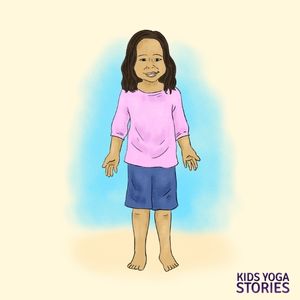
2- Pretend to be a volcano.
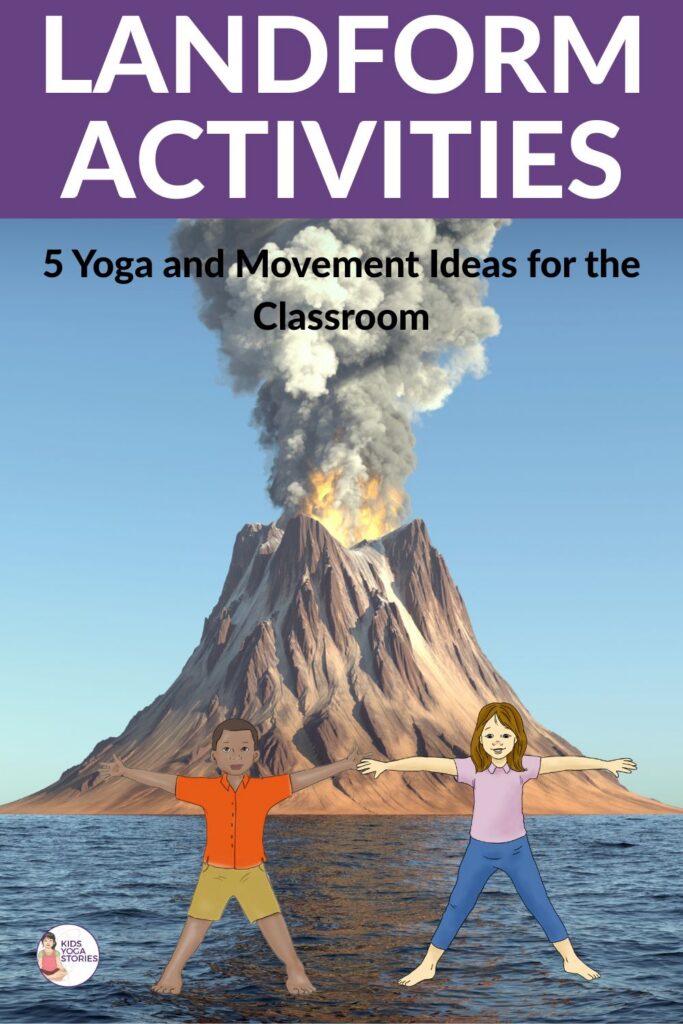
How to practice Star Pose: Start in Mountain Pose. Then jump your feet out wide while exploding both arms out to your sides and above your head, spreading your fingers wide like an erupting volcano. Come back to Mountain Pose, then explode out again. You can even make a gentle “whoosh” sound like lava flowing.

3- Pretend to be an island.
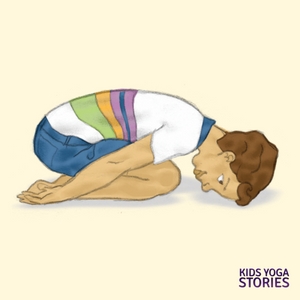
How to practice Child’s Pose: Sit on your heels, then slowly bring your forehead down to rest on the floor in front of your knees. Rest your arms alongside your body and take a few deep breaths. Imagine you are a quiet island in the middle of the ocean, surrounded by calm water.
4- Pretend to be a valley (or canyon.
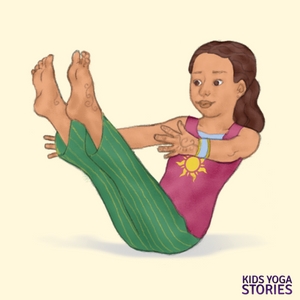
How to practice Boat Pose: Balance on your sitting bones with your legs and arms stretched out in front of you in a V shape. Keep your spine long and your chest open. Imagine you are a valley between two mountains, strong and steady in the middle.
5- Pretend to be a river.
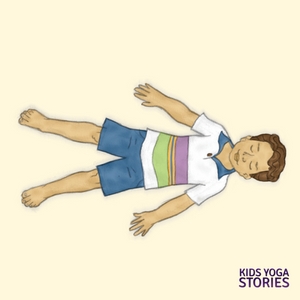
How to practice Resting Pose: Lie on your back with your arms and legs stretched out comfortably. As you take slow, deep breaths, imagine water flowing gently through a river. You can even make a soft flowing sound with your breath as you exhale.
How to Practice Landform Yoga in Your Classroom
You can keep this simple and flexible:
- Add these yoga postures during a science lesson on landforms
- Use them as a quick movement break
- Create a short sequence and repeat it together
- Invite children to name other landforms and create their own yoga poses
This is a great way to bring learning off the page and into the body.
Yoga doesn’t have to be complicated to be effective. Even a few simple yoga postures like these can help children better understand what they’re learning, while also giving them a chance to move, breathe, and reset.
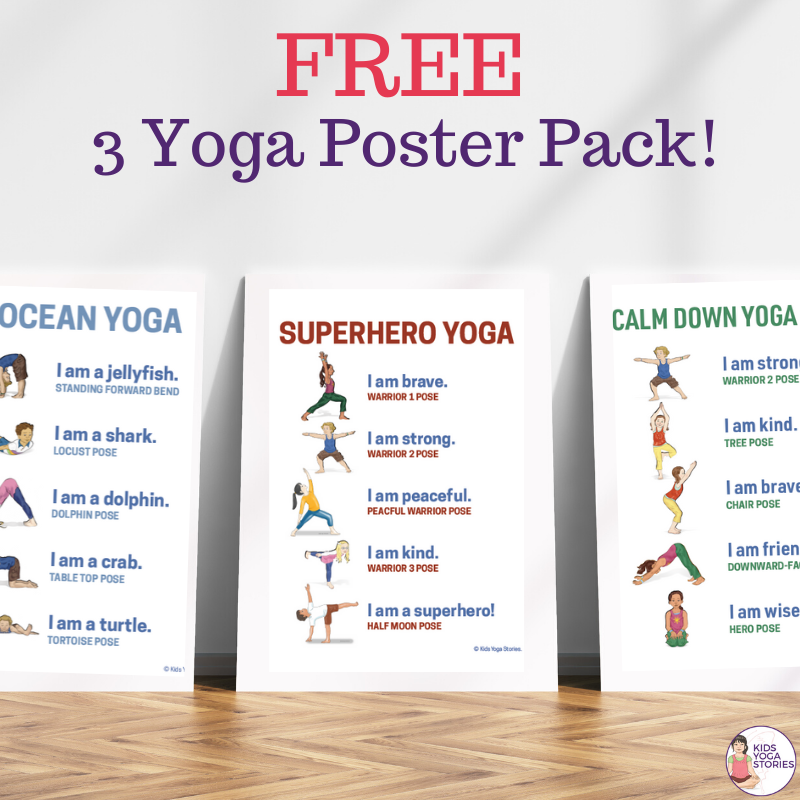
GET YOUR 3 POSTERS HERE
8 Landform Picture Books for Your Yoga Lesson
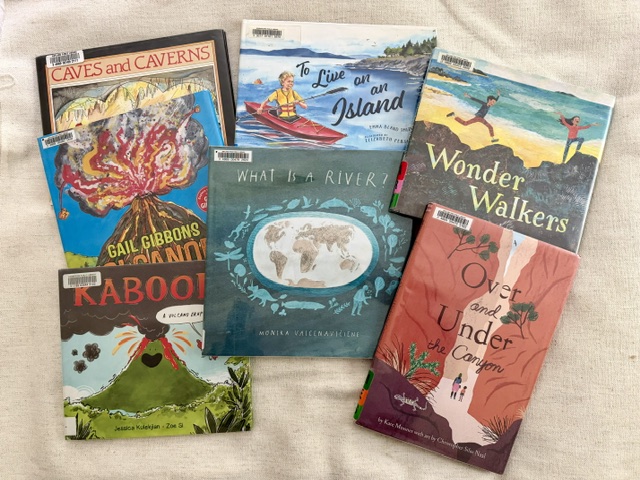
If you’d like to extend this activity, pairing your yoga poses with a picture book is a simple and effective way to deepen children’s understanding. Here are a few favorites you might enjoy:
This article contains Amazon affiliate links.
Volcanoes by Gail Gibbons
This engaging nonfiction picture book introduces children to volcanoes, how they form, and how they erupt, with colorful illustrations and simple explanations. It pairs perfectly with Volcano Pose and earth science themes.
Best for: Ages 5–9
Kaboom! A Volcano Erupts by Jessica Kulekjian, illustrated by Zoe SiAnother volcano book, this playful picture book for younger children follows the dramatic eruption of a volcano with lively illustrations and sound effects that children love. It’s a fun read-aloud choice to pair with active movement and Volcano Pose.
Best for: Ages 4–8
What Is a River? by Monika Vaicenavičienė
This beautifully illustrated book explores rivers around the world through science, culture, and storytelling. The calming illustrations and thoughtful pacing make it a lovely companion to your river studies and water-themed yoga lessons.
Best for: Ages 5–10
To Live on an Island by Emma Bland Smith, illustrated by Elizabeth Person
This gentle story explores what life is like on islands in the Pacific Northwest. Children will enjoy learning how people adapt to island environments while learning through literacy and movement.
Best for: Ages 4–8
Over and Under the Canyon by Kate Messner, illustrated by Christopher Silas Neal
This beautifully written nature book explores the plants, animals, and hidden life inside a canyon ecosystem. It’s wonderful for encouraging curiosity, observation, and mindful movement inspired by valleys, rocks, and desert landscapes. I love this “Over and Under” book series.
Best for: Ages 5–9
Caves and Caverns by Gail Gibbons
This nonfiction picture book introduces children to caves, caverns, stalactites, and underground formations through clear explanations and detailed illustrations. It’s a great addition to a landforms or earth science unit. Even though it’s an older book, it’s still relevant and interesting for today’s classrooms.
Best for: Ages 5–9
There’s a Mountain in This Book by Rachel Elliot
This interactive nonfiction book explains how mountains are formed in a playful, accessible way, with flaps and visuals that make it engaging for young learners. It’s a great companion for your Mountain and Volcano poses.
Best for: Ages 4–8
Wonder Walkers by Micha Archer
While not specifically about landforms, this beautiful, nature-based picture book invites children to observe and wonder about the natural world. It pairs beautifully with movement and imagination-based yoga.
Best for: Ages 4–8
How to Use Books + Yoga Together
You can keep this simple:
- Read the book first, then act out the landforms
- Pause during the story and add movement
- Invite children to create their own landform poses
- Combine with drawing or labeling activities afterward
Bringing movement into science lessons like this helps children experience learning in a hands-on, memorable way. Sometimes pretending to be a mountain, river, or volcano is all it takes to make a concept truly stick.
MAY WE SUGGEST



YOU MIGHT ALSO LIKE
SAVE FOR LATER