How One School Wellness Program Helps Students Become Leaders of Their Well-Being
Discover how one school wellness program helps students become leaders of their well-being through mindfulness, breathing exercises, yoga, and social-emotional learning. K-2 Wellness Teacher and School Yoga Program alum Deanna Semyon shares her story.
How Yoga and Mindfulness Grew from One Student to an Entire School Community
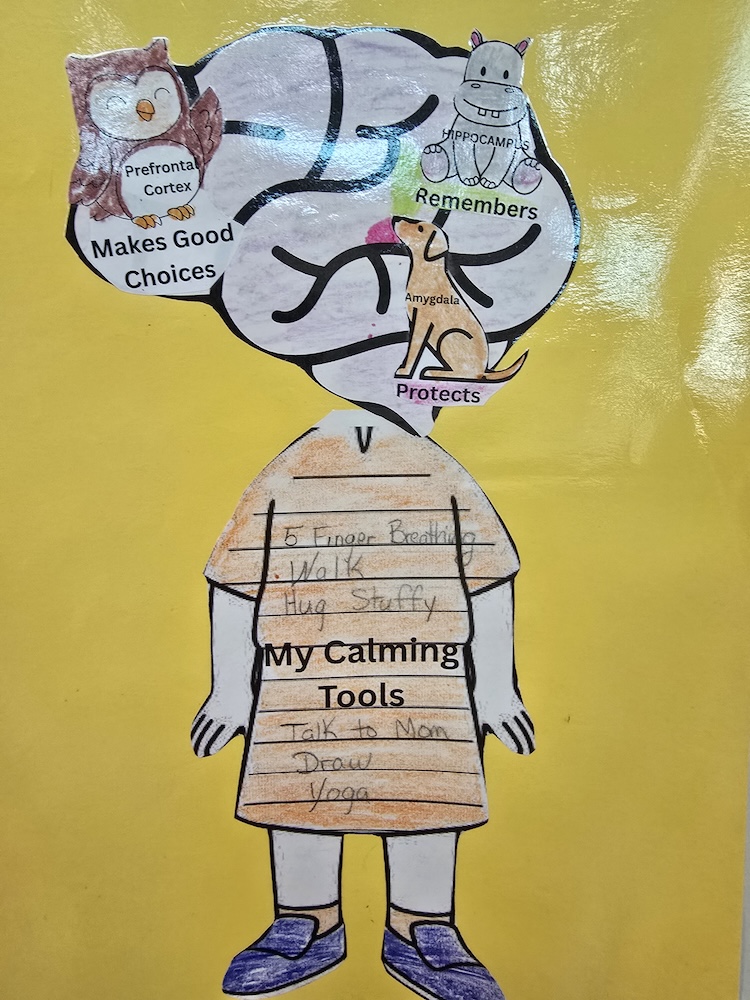
One of my kindergarten students was terrified. He was going to the dentist to have a cavity filled after school, and he was anxious from the moment he arrived at school. As his worries grew throughout the day, we practiced five-finger breathing (or Take 5 Breath) and repeated simple affirmations together:
“I am strong.”
“I am brave.”
“I am going to be okay.”
Near dismissal time, his classroom teacher called me and asked if I could come right away. The student was struggling again, so we reviewed the five-finger breathing one more time. He held onto a breathing worksheet from a previous lesson and took it with him to his appointment.
The next day, he came running up to me. He gave me a hug and excitedly shared, “I did it, and it wasn’t bad at all. I just kept tracing my hand and breathing and saying I am okay.”
It was a wonderful moment, but what happened next is what stayed with me. Two years later, that same student was preparing for a school musical. Before the performance, he saw me and asked if I could help everyone breathe calmly. A short time later, during a moving-up ceremony, he asked again.
This time I reminded him that he could use the breathing techniques anytime he wanted.
He smiled and said, “I do, and I am doing it now, but some people don’t know or remember to use it. I want to help them enjoy this moment too.”
Those moments make me realize that mindfulness was doing more than helping students regulate emotions. The goal was never for students to depend on me. The goal was for them to recognize the tools within themselves and eventually share those tools with others. That’s exactly what this student was doing.

Where It All Began
My journey with yoga and mindfulness began in 2015 while I was working as a special educator in a self-contained classroom. I was looking for ways to support my students, the paraprofessionals who worked alongside me, and even myself. I wanted to create greater calm, connection, and well-being in our classroom.
As I explored mindfulness, yoga, and the brain-body connection, I began introducing simple practices into our daily routine. Over the past decade, I have continued to deepen my knowledge through professional development in yoga, mindfulness, trauma-informed education, and social-emotional learning.
I discovered that small practices often create powerful shifts.
A Student and a Calming Bottle
One of the first moments that showed me the impact of this work involved a student who was still learning English. He was struggling with big emotions and moving throughout the classroom in a way that told me he needed support. As he approached the counter where we kept our amygdala, or “calming,” bottles, he suddenly stopped. He picked up his bottle, handed it to me, sat down, and cried.
In that moment, he didn’t need words. The calming bottle gave him a way to communicate what he was feeling. It was one of the first times I truly understood the power of helping children recognize and express their emotions.
Students who had previously responded to frustration with physical aggression began reaching for their bottles instead. They would shake the bottle, watch the glitter settle, and tell me, “I feel like this.” For many students, the bottle became a bridge between what they were feeling and how they could express it.
A Student Becomes the Teacher
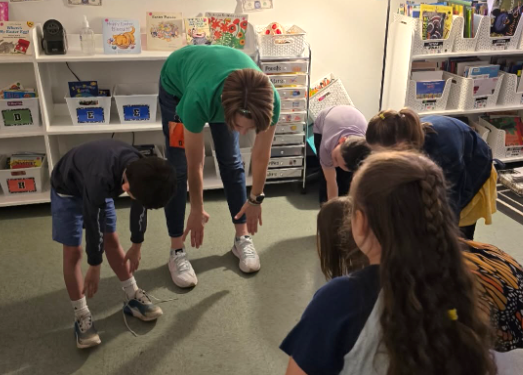
Another memorable moment happened during one of our mirror yoga activities. During these sessions, students silently follow a leader’s movements. Sometimes I invite a student to become the leader.
One student was not particularly interested in yoga or movement, but he repeatedly asked if he could lead. Eventually, I gave him the opportunity.
To my surprise, he led an entire yoga flow that he had observed in previous classes. He moved confidently through the sequence, guided the group through a hand-on-heart and hand-on-belly breathing practice, and then asked everyone to sit down and draw their favorite part of the activity. He was incredibly proud of himself.
Although he continued to be a bit of a jokester, he became someone I could count on to help lead mindfulness breaks whenever unexpected situations pulled me away from the group.
Moments like these in our school wellness program remind me that students are capable of far more than we sometimes realize.
Over time, these individual moments inspired me to think beyond a single classroom. I began looking for simple ways to weave wellness practices throughout the entire school day so that students could encounter them again and again.
5 Ways We Bring Wellness into Our School Day
Today, I have the privilege of teaching a school wellness program to approximately 450 students. While every school is different, these are some of the practices that have helped create a culture of well-being in our building.
1. A Chime as a Mindful Attention Getter
Every student in our building responds to the sound of a chime. When they hear it, students place their hands on their heart or belly and take several deep breaths while listening carefully to the sounds around them and within themselves. It only takes a minute, but it creates a shared moment of calm and attention throughout the school.
2. Daily Mindful Activities During Morning Announcements
Each morning, our principal introduces me during the announcements and invites me to share a mindful activity with the entire school. Students receive a mindful script and coloring page to bring home, while teachers receive materials they can use in their classrooms.
One teacher initially wasn’t sure how to use the breathing sheets I provided. After we talked and I demonstrated how to use them, he began incorporating them regularly. By the end of the year, an entire classroom wall was covered with breathing sheets.
He later told me, “Some of the kids really like them so they can go to them whenever they want.” That felt like a huge win.
3. A Wellness Walk in the Hallway
Our Wellness Walk gives students opportunities to practice movement, yoga poses, mindful breathing, hydration reminders, nutrition tips, and positive affirmations throughout the school day. Students can engage with it independently or alongside classmates, making wellness visible and accessible throughout the building.
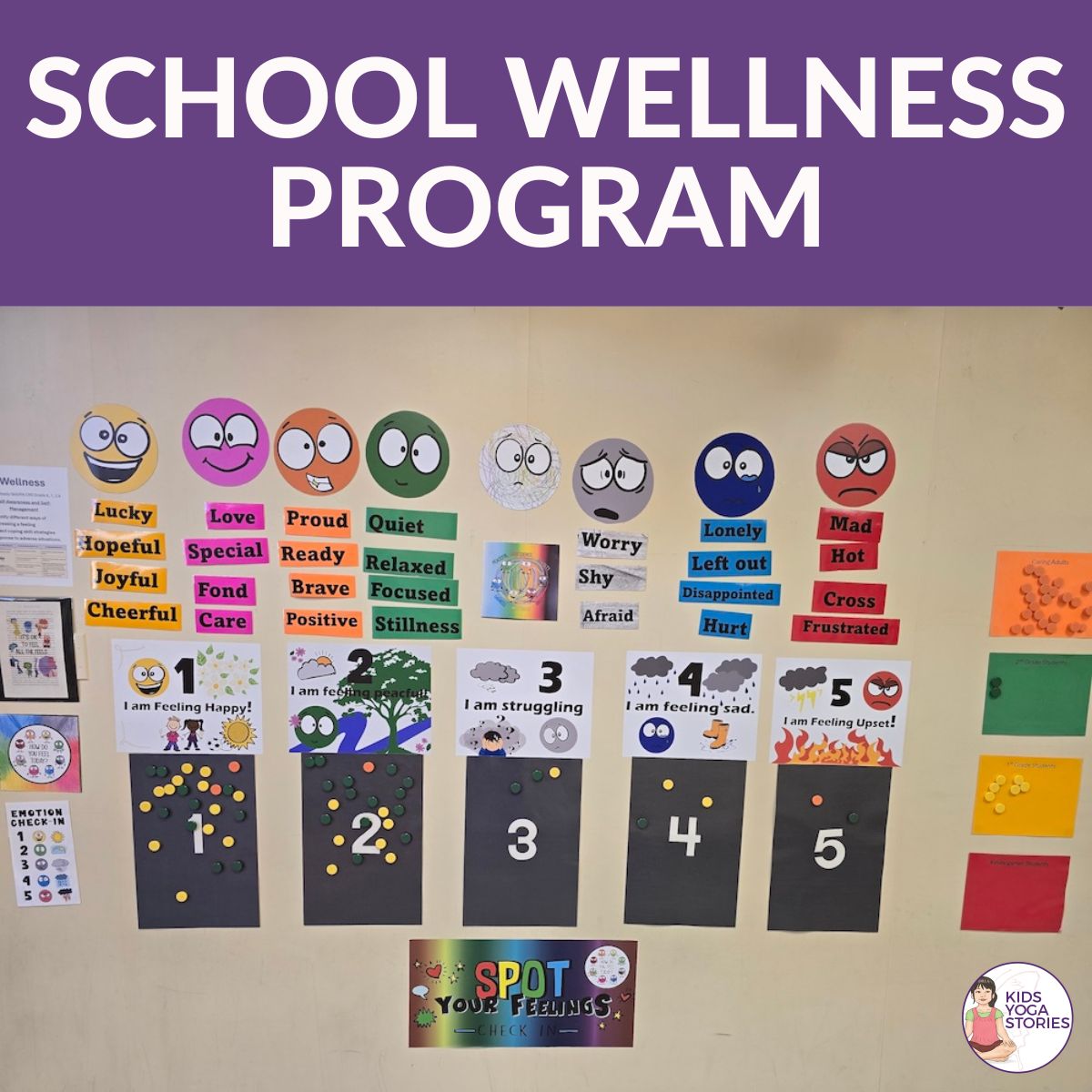
4. A School-Wide Feelings Check-In
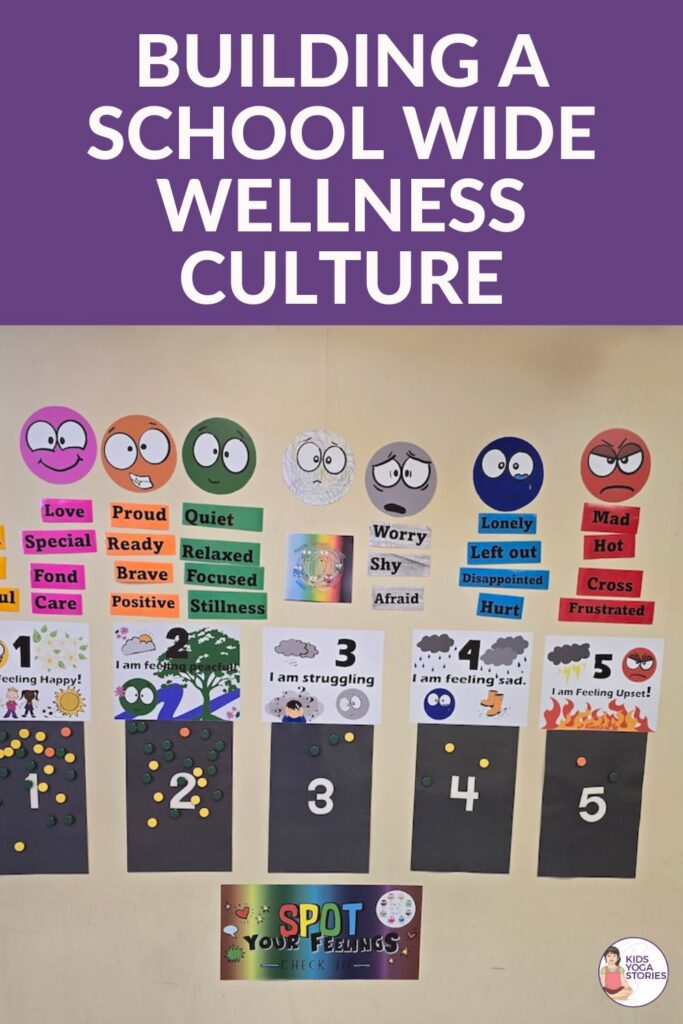
Inspired by Diane Alber’s A Little Spot of Emotion books, I created a feelings check-in board where students can place a magnet on the emotion that best matches how they are feeling.
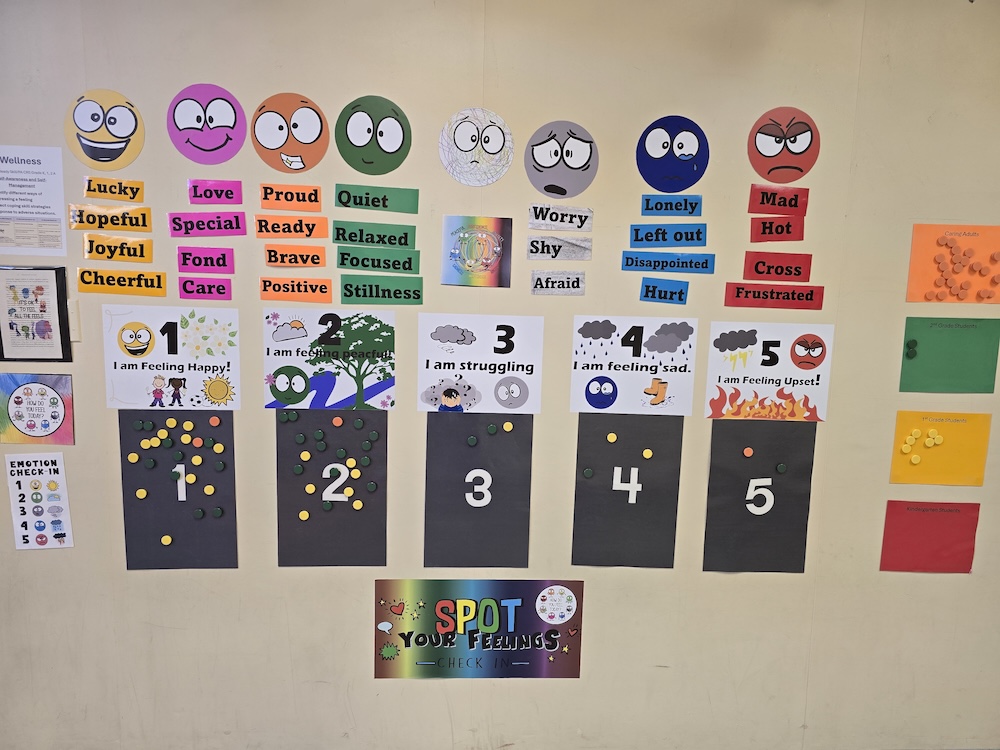
What I love most is that adults participate too. Teachers, paraprofessionals, custodians, administrators, and visiting agency staff regularly stop by to check in. This reinforces the idea that everyone has emotions and everyone benefits from taking a moment to notice them.
5. Bringing Yoga, Literacy, and STEM Together
One of my favorite school-wide events is our annual STEM Showcase, which focuses on agriculture. This year, I incorporated Sally’s Visit to the Farm from Kids Yoga Stories as part of the experience. Students explored movement, literacy, and agriculture together through storytelling and yoga.
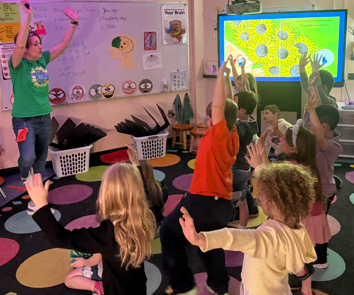
It was a wonderful reminder that yoga and mindfulness do not need to exist separately from academic learning. They can be woven into existing curriculum and help students engage with content in meaningful and memorable ways.
Final Reflections
My story is not a straight path. It has been filled with twists, turns, challenges, and triumphs. Throughout those experiences, yoga, mindfulness, and resilience have given me tools that support both my students and myself.
What I have learned over the years of developing our school wellness program is that the most meaningful moments are often the quiet ones.
A student handing over a calming bottle instead of acting out.
A child confidently leading a yoga flow.
A second grader teaching breathing skills to his peers before a performance.
These moments remind me that children are always learning from the opportunities we provide. Sometimes they learn the skill. Sometimes they become the teacher.
I often think about something my mindfulness mentor shared during my very first training:
“We are human beings, not human doers.”
Those words continue to guide me every day.
Could This Be Your School?
What would it look like if students in your school had tools to calm their nervous systems, navigate big emotions, and support one another through challenging moments?
Deanna’s journey began with a few simple mindfulness and yoga practices in her classroom. Today, those practices are woven throughout her school community and reach hundreds of students each day through her customized school wellness program.
Deanna is a graduate of our School Yoga Program. If you feel inspired to bring yoga and mindfulness into your own school or community, we’d love to support you on your journey!
About the Author
Deanna Semyon is a K-2 Wellness Teacher and former special educator who has spent the past decade helping students develop self-regulation, social-emotional learning, and mindfulness skills. She has completed extensive training in yoga, mindfulness, trauma-informed education, and social-emotional learning, including the Kids Yoga Stories School Yoga Program, the Antioch University Mindfulness for Educators Certificate, Trauma-Informed Educator Certificate, Yoga Calm Youth Instructor training, and the Mindful Kids Teaching Certificate. She currently supports approximately 450 students through school-wide wellness initiatives that integrate mindfulness, movement, breathing practices, and social-emotional learning into everyday school life.
MAY WE SUGGEST

YOU MIGHT ALSO LIKE
SAVE THIS FOR LATER