10 Yoga and Mindfulness Activities to Strengthen Left and Right Brain Integration in Children
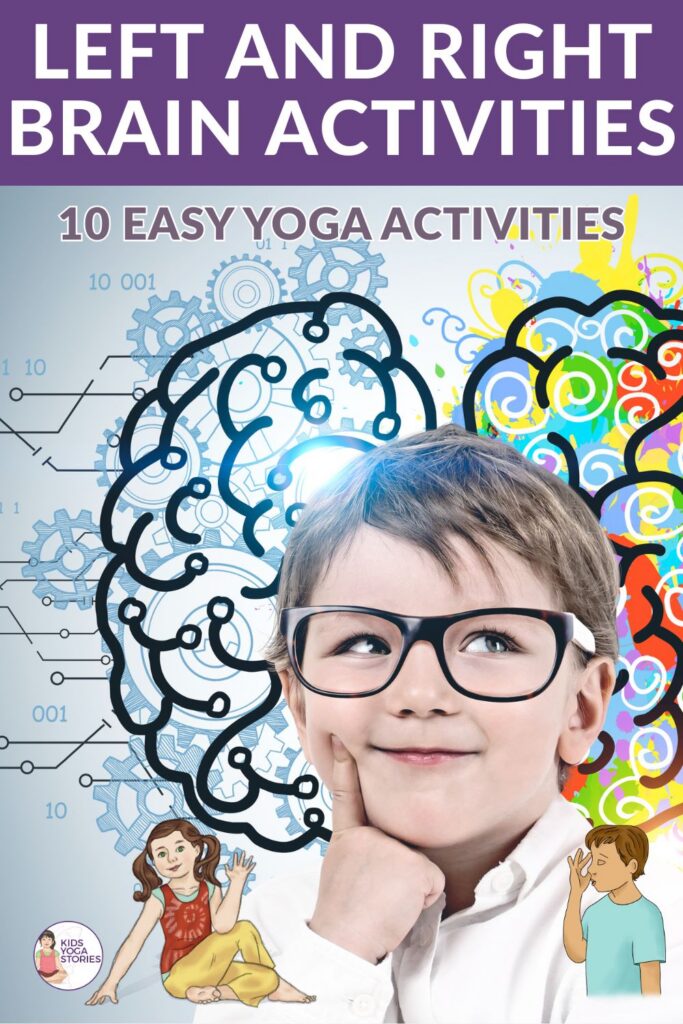
In this article, we’re diving deeper into a question asked by one of our Kids Yoga Stories community members. We will explore how to strengthen left-and-right-brain integration with yoga postures, breathing exercises, and yoga games.
Have you ever noticed that some children have trouble telling left from right (my kid!), crossing their arms when reaching, or staying focused when asked to coordinate both sides of their bodies? In early elementary years (preschool through second grade), these challenges are completely normal, and they signal an important stage of brain development. Helping children strengthen left-right body and brain awareness not only supports movement skills, but also enhances attention, self-regulation, and learning readiness.
In the classroom, yoga and mindfulness activities offer a playful and powerful way to build these skills through movement, breath, and body awareness. Whether you’re an educator, occupational therapist, counselor, or children’s yoga teacher, these activities can easily be woven into your daily routine.
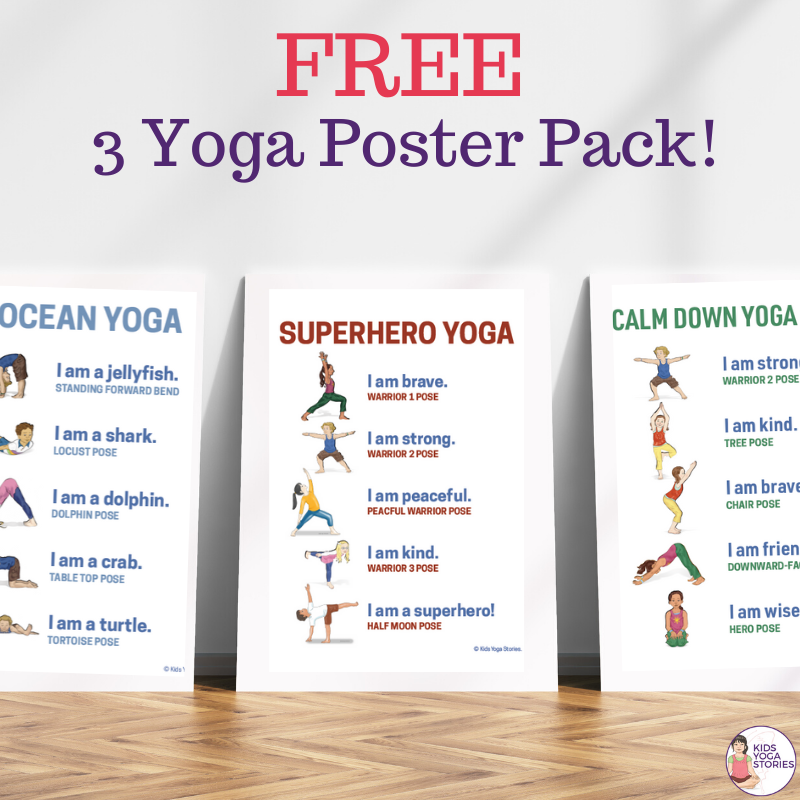
GET YOUR 3 POSTERS HERE
Why Left–Right Brain Integration Matters
The brain’s two hemispheres communicate through a bridge of nerves called the corpus callosum. When children cross the midline—like reaching across the body with one hand or twisting to one side—they strengthen this bridge, improving coordination and higher-level thinking.
Research shows:
- Crossing the midline supports coordination, focus, and foundational literacy. Read Here.
- Gross motor play that integrates both sides of the body strengthens executive functioning, including working memory and attention. Read Here.
- Regular cross-body movements, such as crossing the midline, help activate both hemispheres of the brain and strengthen communication between them, supporting coordination, learning, and cognitive development. Read Here.
When we layer movement, mindfulness, and play together, we give children tools to balance energy, improve focus, and feel more at home in their own bodies.
10 Yoga and Mindfulness Activities to Build Left-and-Right Brain Awareness
Each of these yoga postures, breathing exercises, and yoga games can be adapted for early elementary classrooms, therapy sessions, or home practice.
1. Seated Twist (Yoga Posture)
From a seated position, sit tall, inhale arms up, and exhale as you twist to one side placing one hand behind and the other on the opposite knee. Repeat on the other side.
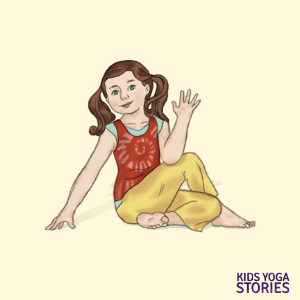
Classroom tip: Encourage children to notice how their right hand moves to the left side and vice versa.
Why this helps: Twisting crosses the midline of the trunk and invites cooperation between brain hemispheres.
2. Warrior 2 Pose (Yoga Posture with Left/Right Focus)
From standing, step one foot back, bend your front knee, and open your arms wide. Gaze over your front fingertips. Then switch sides and repeat the steps.
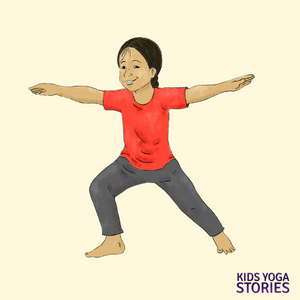
Classroom tip: Use colored floor markers to show which foot is in front and which is behind.
Why this helps: Strengthens spatial awareness and balance while reinforcing side-to-side coordination.
3. Crescent Moon Pose with Twist (Yoga Posture)
Below are a few variations you could practice with Crescent Moon Pose. You could try all three, or just pick one, whatever suits you:
Option 1: Standing tall, inhale as you bring your arms overhead. Touch your palms together. Exhale and lean gently to the right side in Crescent Moon Pose. Return to center with your arms overhead. Repeat on the left side.
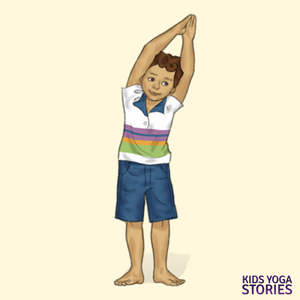
Option 2: As you inhale, raise your arms overhead. Then exhale and twist your upper torso to the right, open your arms, and bring your left arm forward and your right arm back. Inhale, returning to center with your arms overhead. Exhale and twist your upper torso to the left, open your arms, and bring your right arm forward and your left arm back. Continue this flow, twisting to the right and left a few times.
Option 3: Standing tall, inhale as you bring your arms overhead. Then exhaling, reach your right arm down to the right side while lifting your left arm overhead and arching to the left. Return to center with your arms overhead. Repeat on the left side.
Classroom tip: Have children say, “I stretch my right side; I stretch my left side,” then “I twist right; I twist left.” These movements could also be done in a chair.
Why this helps: Builds flexibility and body awareness while engaging both sides of the brain and body.
4. Alternate Nostril Breathing (Breathing Exercise)
Place the middle finger of your right hand on your forehead between your eyebrows (third eye center). Close your right nostril gently with your right thumb and inhale slowly through your left nostril. Pause at the top of your inhalation and release your right thumb. Close your left nostril gently with your ring finger and exhale slowly through your right nostril. Pause at the bottom of your exhalation then inhale through your right nostril. Pause at the top of the inhalation, release your ring finger, close your right nostril with your thumb, and exhale through your left nostril. Repeat these steps at least four times.
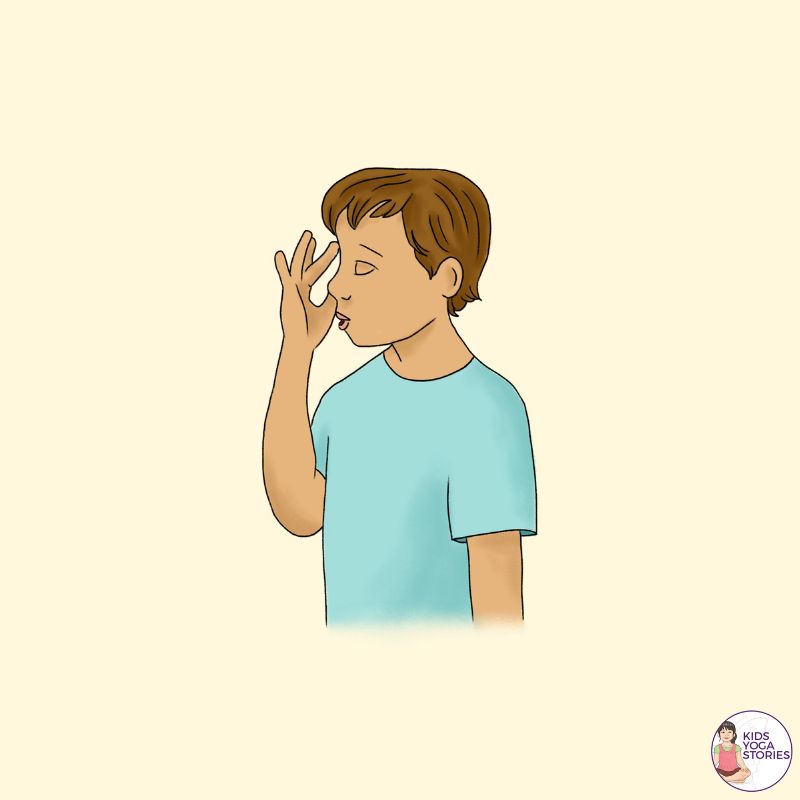
Variation: Younger children might find it easier to use their pointer finger to close their nostrils.
Classroom tip: Invite children to imagine their breath gently flowing from one side of the body to the other.
Why this helps: Alternating nostrils mimics left-right brain switching, calming the nervous system and improving focus.
5. Figure 8 Breath (Breathing Exercise)
Take your right pointer finger out in front of you. As you trace a figure “8” in the air, practice inhaling and exhaling deeply. Focus your eyes on your moving finger and feel your belly expand and contract with your deep belly breathing. Now try with your left pointer finger. See if each side feels different. Now try both fingers at the same time.

Classroom tip: Create “Figure 8” traceable shapes for students to trace.
Why this helps: Encourages smooth coordination, midline crossing, and steady breathing.
6. Body Scan with Left/Right Awareness (Mindfulness Exercise)
Guide the children to lie down or sit and notice their body—right foot, left foot, right hand, and left hand, moving up through the body.
Classroom tip: Use two colored beanbags (one red for right, one blue for left) as tactile cues.
Why this helps: Mindfully noticing each side separately strengthens sensory awareness and body connection.
7. Yogi Says (Yoga Game)
This is a playful twist on Simon Says! The leader calls out yoga poses with left/right cues, such as “Yogi says, stand on your left foot in Tree Pose” or “Yogi says, Warrior 3 Pose on your right leg” or “Yogi says, do Dancer’s Pose standing on your left leg.”
At some point, the yogi leader will not start the instruction with “Yogi says …” and will simply say the command. Any player who follows that instruction is eliminated from the game by sitting down or stepping to the side.
Classroom tip: Mix balancing, stretching, and twisting poses to challenge both sides equally.
Why this helps: Builds listening skills, body control, and left/right coordination.
8. Mirror Me, Yogi (Partner Yoga Game)
Partners face each other. One leads through yoga postures while the other mirrors the movements. Try partner poses that cross the midline such as Partner Seated Twist, Partner Warrior 2 Pose, or Partner Extended Side Angle Pose. Then switch roles.
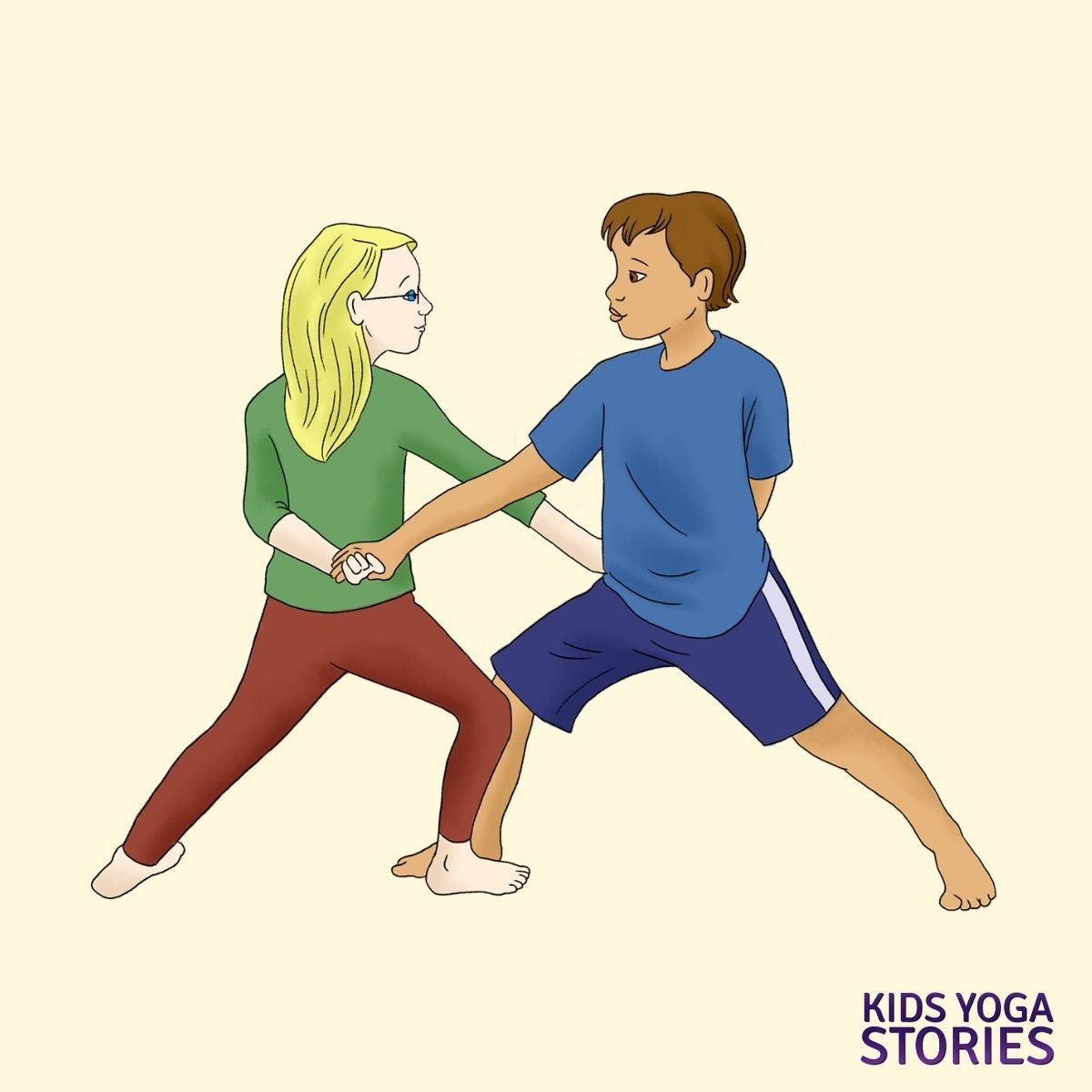
Classroom tip: Encourage silent communication and observation.
Why this helps: Reinforces spatial awareness, empathy, and bilateral coordination through teamwork.
9. Cross-Body Breath Flow (Linking Breath to Movement)
From standing, inhale and open your arms wide. Exhale, bringing one hand across to the opposite knee or hip. Inhale to open wide again, then exhale to cross to the other side. Continue linking your breath to this cross-body movement a few times. Then come back to standing tall and notice how you feel.
Classroom tip: Guide students to imagine their breath moving in an arc across the body.
Why this helps: Synchronizing breath with cross-body movement strengthens brain-body integration and focus.
10. Extended Cat Pose (Cross-Body Balance)
From Table Top Pose, extend your right arm forward and your left leg back in Extended Cat Pose. Bring you right hand and left knee together under your belly, then extend again. Repeat this a few times, extending your hand and leg out before bringing them to meet under your belly. Then repeat on the other side.
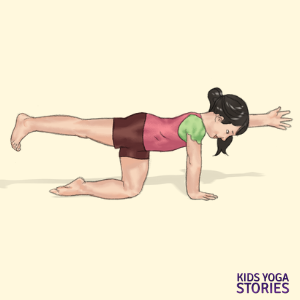
Classroom tip: Cue them to “stretch like a long cat” and “curl like a tiny cat.”
Why this helps: Strengthens balance, stability, and opposite-side coordination, great for building both physical and mental focus.
Why It Matters in the Classroom
When children move across the midline, switch sides, and build awareness of their left and right, they’re not just moving. They’re connecting neural pathways that support literacy, coordination, focus, and emotional regulation. Integrating left-right awareness into yoga and mindfulness routines helps students build confidence, concentration, and a calm, balanced presence—skills that carry beyond the classroom.
MAY WE SUGGEST

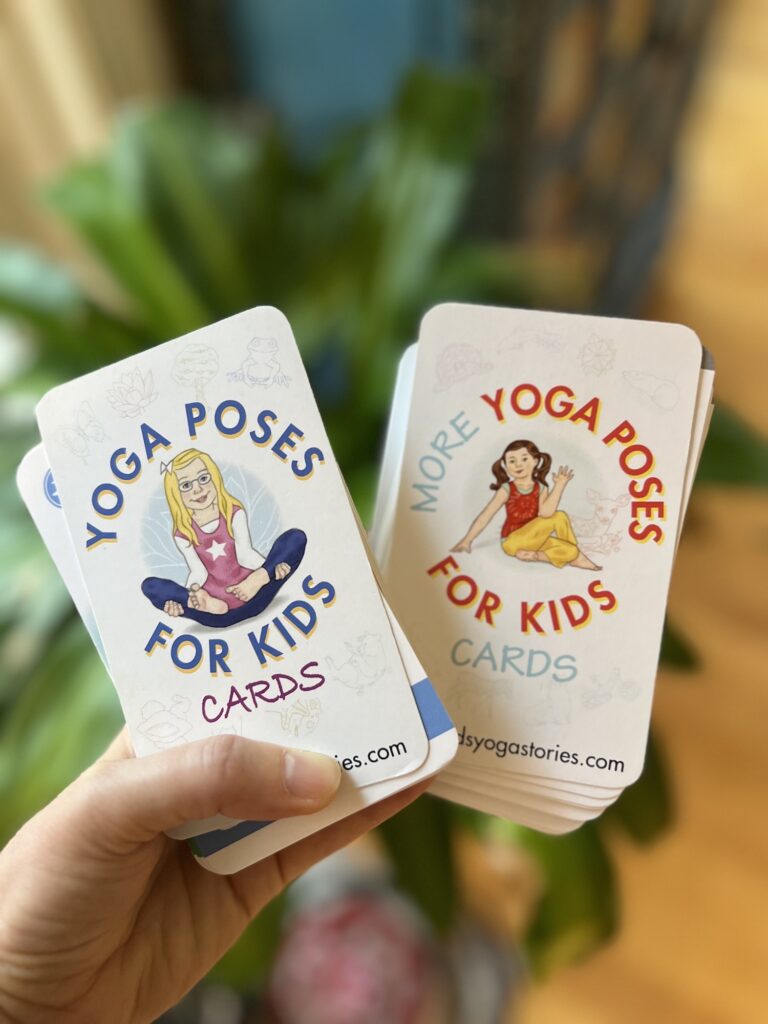
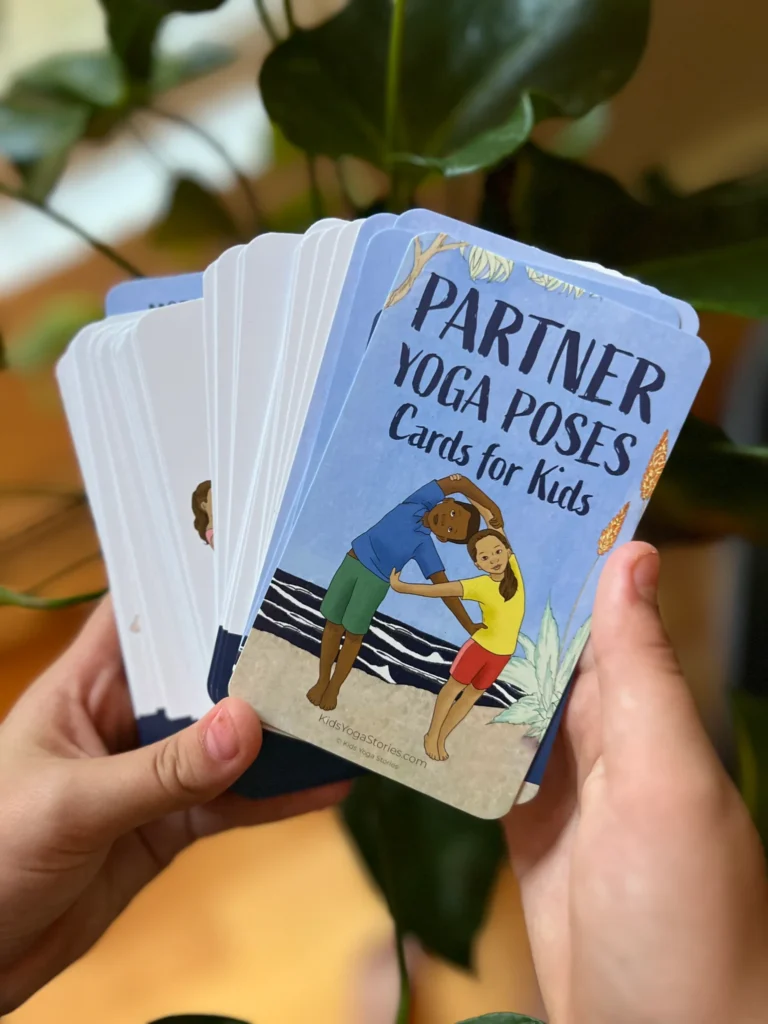
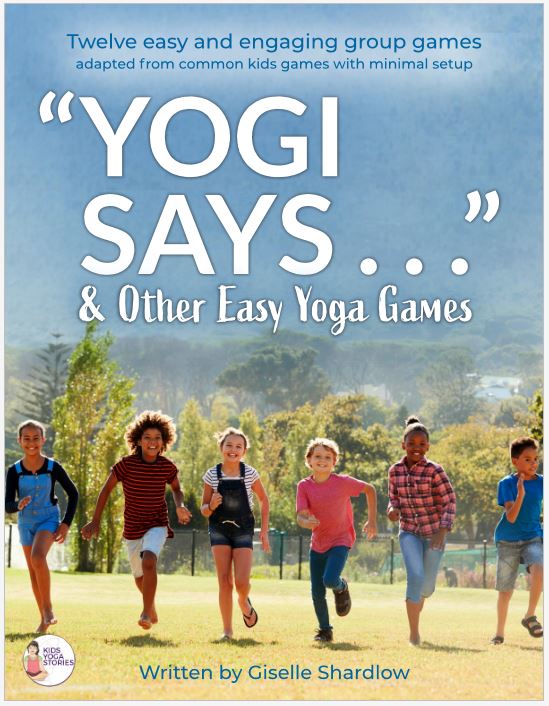
From Our PT and OT Friends
- A clear overview of how crossing the midline supports coordination, motor planning, and everyday functional skills in children: read more here.
- Practical cross-lateral worksheets designed to strengthen communication between brain hemispheres and support learning readiness: explore more here.
- An explanation of why midline crossing is essential for hand dominance, visual tracking, and early reading and writing development: learn more here.
- A collection of simple, play-based activities that build midline crossing through everyday movement: see ideas here.
- A fun gross motor marching activity that encourages cross-body movement to develop bilateral coordination and core strength: check it out here.
You Might Also Like
SAVE FOR LATER