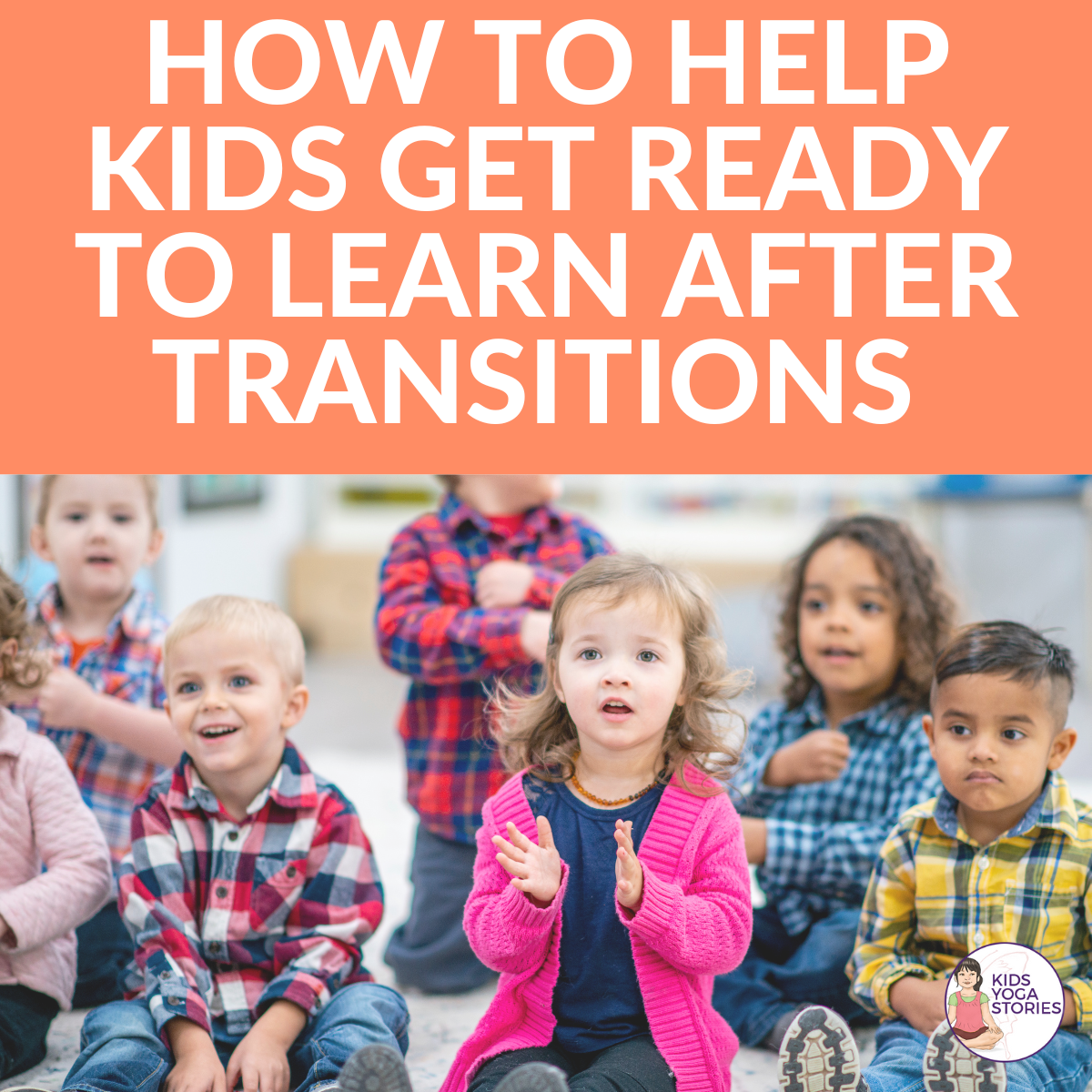
How to Help Kids Get Ready to Learn After Transitions
Transitions are often the hardest part of the school day. Coming in from recess, switching subjects, lining up, or moving from group work to independent work can quickly throw kids off balance.
Instead of correcting behavior or repeating directions, it helps to reset the nervous system first. When kids feel organized in their bodies, they are much more ready to listen, focus, and learn.
Quick Transition Reset for Learning Readiness (2–5 Minutes)
To help kids get ready to learn after transitions:
- Pause and orient (30 seconds): Name the transition and signal a reset.
- Use grounding movement (1–2 minutes): Simple stretches or standing poses to settle bodies.
- Add a breathing cue (1 minute): One slow, guided breath pattern.
- Preview the next task (30–60 seconds): Clearly explain what comes next.
Best use: after recess, lunch, specials, or hallway transitions.
This routine supports regulation without taking away valuable instructional time.
Teachers can help kids get ready to learn after transitions by using short, predictable regulation routines that reset the body and brain before academic work begins. Movement, breathing, and clear structure work together to support focus and readiness.
This guide is for classroom teachers, school counselors, special education staff, pediatric therapists, yoga teachers, and school support professionals working with preschool and elementary-aged children.
When to Use It
- Transition resets are especially helpful:
- After recess or PE
- After lunch or snack
- Moving from play to academics
- Switching subjects
- After assemblies or drills
|
Transition Moment |
Best Reset Tool |
Time Needed |
|---|---|---|
|
After recess |
Grounding movement + Breath |
3-5 minutes |
|
After lunch |
Breathing first, then Movement |
2-4 minutes |
|
Between subjects |
Standing stretch + Preview |
2 minutes |
|
After assemblies |
Slow movement + clear script |
4-5 minutes |
Core Protocol: Expanded Steps
1. Pause and Orient
A brief pause helps kids shift gears.
- Use the same phrase every time
- Keep your tone calm and neutral
- Avoid giving multiple instructions at once
2. Ground the Body With Movement
Choose slow, steady movements that bring attention inward.
- Feet pressing into the floor
- Gentle stretches at desks
- Simple standing yoga poses
3. Add a Breathing Cue
Breathing helps slow the nervous system.
- Breathe in through the nose
- Long, slow exhale through the mouth
- Count or use a visual cue
4. Preview the Next Task
End with clarity and predictability.
- What materials do we need?
- How long will it last?
- What does “ready” look like?
Teacher Script (Copy/Paste)
- “We just came in from recess. Let’s reset our bodies.”
- “Feet on the floor. Stretch your arms up, then down.”
- “Breathe in through your nose. Breathe out slowly.”
- “Next, we’re opening our reading notebooks to page five.”
Scripts reduce confusion and help kids transition more smoothly.

Variations & Accommodations
- Short on time: Use just breathing or movement
- Seated classrooms: All steps can be done in chairs
- Sensory-sensitive students: Allow quiet participation or observation
- Older students: Use fewer words and more modeling
Why This Works (Evidence-Informed, Plain English)
Transitions activate the nervous system. Kids move from one demand to another without time to reset.
Movement and breathing help signal safety and predictability. Once the body feels settled, the brain is better able to focus, follow directions, and engage.
In short: regulated transitions lead to ready-to-learn classrooms.
If You Only Have 1 Minute / 3 Minutes / 5 Minutes
If You Only Have 1 Minute
- One grounding breath
- Clear preview of next task
If You Have 3 Minutes
- Standing stretch
- One breathing pattern
- Task preview
If You Have 5 Minutes
- Full movement + breathing reset
- Materials check and readiness cue
Implementation Tips
- Use the same routine daily
- Keep transitions predictable
- Join in with students
- Start before behaviors escalate
Quick FAQ
How long should a transition reset take?
Most transition resets take 2–5 minutes.
Do I need special equipment?
No materials are required.
What if kids are too excited to settle?
Start with movement first, then add breathing.
Does this work for all ages?
Yes. Adjust language and pacing as needed.
What’s Next?
- Classroom support: Use Kids Yoga Stories’ yoga and breathing cards for quick resets
- School-wide solution: Explore the School Yoga Program for consistent transition support across classrooms
Created by Kids Yoga Stories, a trusted leader in classroom yoga, breathing, and mindfulness resources used by educators worldwide for over 14+ years.