5 Evidence-Based Ways to Help Students Calm Their Bodies Before Learning
A practical set of calming strategies teachers can use before lessons, after transitions, or anytime students need help settling their bodies and focusing their attention.
Recommended Classroom Strategy
Helping students calm their bodies before learning improves focus, emotional regulation, and readiness for academic tasks. Short regulation practices—like breathing exercises, gentle movement, grounding techniques, mindful listening, and predictable classroom rituals—help activate the nervous system’s calm response so students can shift from stress or excitement into learning mode.
Most calming routines take 1–3 minutes and work best when used consistently during classroom transitions.
When to Use These Strategies
These techniques work well:
✔️ Before starting a new lesson
✔️ After recess, lunch, or assemblies
✔️ During noisy transitions
✔️ Before tests or focused work time
✔️ When students appear restless, overwhelmed, or distracted
Even a short calming practice can help the whole classroom reset and prepare for learning.
5 Evidence-Based Classroom Strategies
1 — Breathing Exercises (1–2 minutes)
Slow breathing helps activate the body’s parasympathetic nervous system, often called the “calm response.”
This reduces stress signals in the brain and helps students regain focus.
Try simple breathing patterns like:
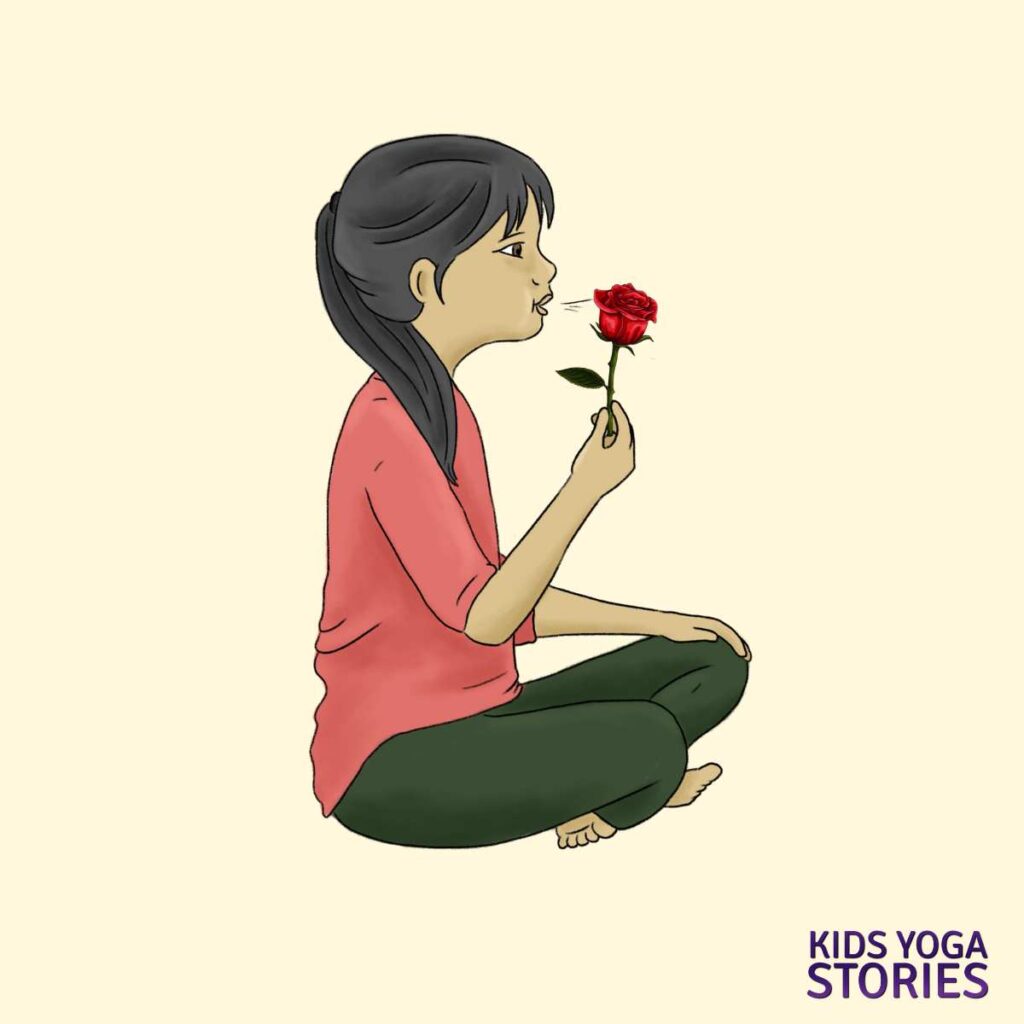
✔️ Flower breath: “Smell the flower, blow out the candle.”
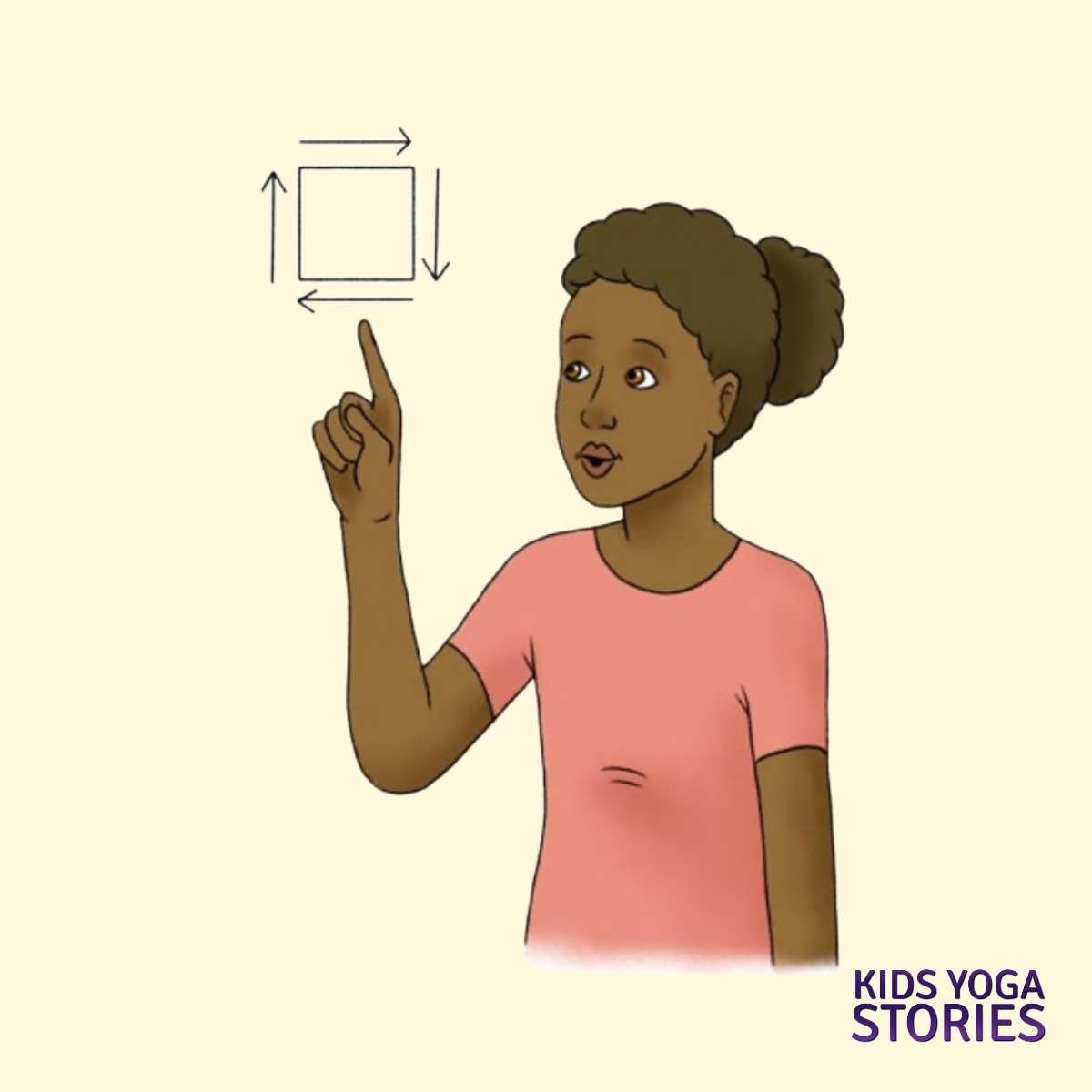
✔️ Box breathing: inhale-4, hold-4, exhale-4, hold-4
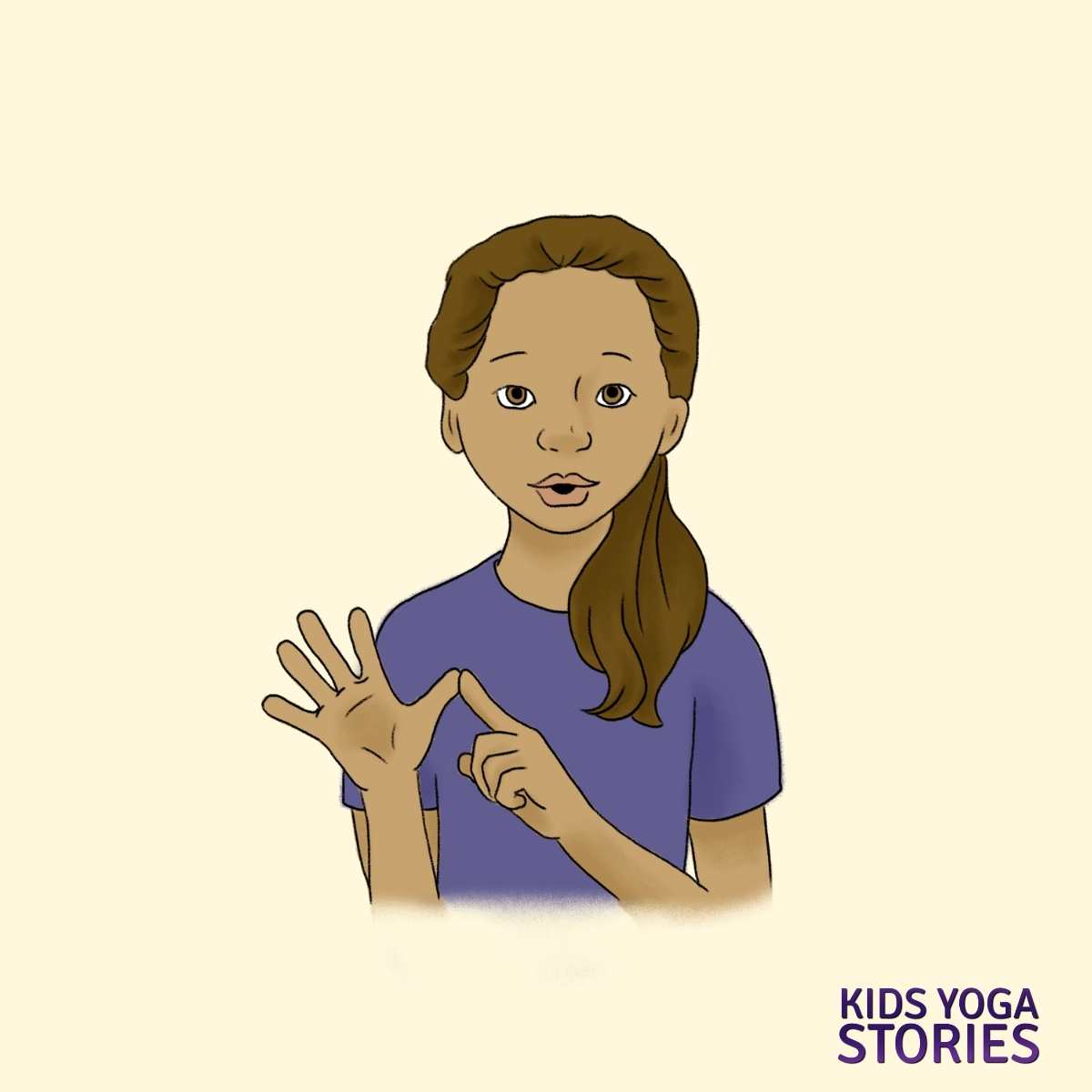
✔️ Five-finger breathing: trace fingers while breathing in and out
Tip: Keep the same breathing exercise for a week so students learn the pattern.
2 — Short Movement Reset (1–2 minutes)
Children often need movement before they can focus. Small, intentional movements help release excess energy and organize their nervous system.
Try:
✔️ 3 yoga poses (mountain, forward fold, star)
✔️ Shoulder rolls × 3 each direction
✔️ Cross-body taps (opposite hand to knee)
✔️ Shake-out movement followed by stillness
Short movement resets improve circulation and help students settle into seated learning.
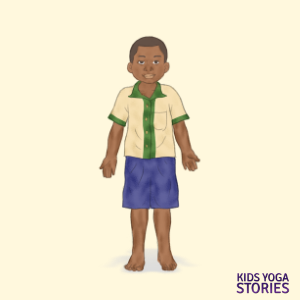
Mountain Pose
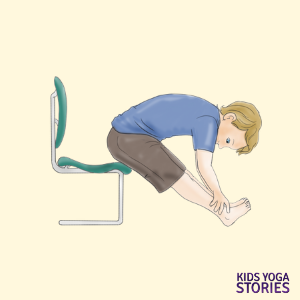
Forward Fold in Chair
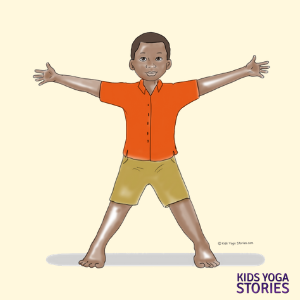
Star Pose
3 — Grounding Activities (30–60 seconds)
Grounding helps students reconnect with their bodies and surroundings when they feel overwhelmed or scattered.
Try:
✔️ “Press your feet into the floor.”
✔️ “Feel your hands on your desk.”
✔️ “Take a breath and feel your body in your chair.”
Grounding helps shift attention from external distractions back to the present moment.
4 — Mindful Listening (30–60 seconds)
Mindful listening builds attention and helps students transition from busy environments to focused learning.
Examples:
✔️ Ring a chime and listen until the sound fades
✔️ Ask students to notice three quiet sounds in the room
✔️ Practice listening to their own breathing
These exercises strengthen concentration and help calm busy minds.
5 — Consistent Classroom Rituals (1–3 minutes)
Predictable routines help students feel safe and prepared.
Over time, rituals signal to the brain:
“It’s time to settle and focus.”
Examples include:
✔️ A daily breathing routine
✔️ A short classroom yoga or chair yoga flow
✔️ A quiet reflection moment
✔️ A calming transition phrase or cue
Consistency is more powerful than variety.
Why These Strategies Work
Calming strategies work because they help regulate the nervous system.
✔️ Slow breathing activates the body’s calm response.
✔️ Gentle movement releases built-up energy.
✔️ Grounding provides physical stability when students feel overwhelmed.
✔️ Mindful listening improves attention control.
✔️ Predictable routines create a sense of safety and structure.
When the body feels calm, the brain can shift from survival mode to learning mode.
Implementation Tips
✔️ Start small — one 1-minute strategy is plenty.
✔️ Use the same language each time so students learn the routine.
✔️ Practice when students are calm so the routine becomes familiar when times are more chaotic.
✔️ Add visuals (breathing cards or yoga posters) to guide students (free ones here)
✔️ Use calming practices before known difficult transitions.
Track What Works
Keep it simple.
Teachers can track impact by:
✔️ noting amount of time until quiet
✔️ observing improved focus during lessons
✔️ asking students if the activities helped them feel calm
Even brief routines can significantly improve classroom readiness.
Quick FAQ
How long should calming activities take?
Most classroom calming practices take 1–3 minutes and can quickly help students shift into a focused learning state.
Do these strategies work for older students?
Yes. Older students often respond well when language is concise and when they are offered choices, such as selecting their preferred breathing exercise.
Are these practices aligned with SEL or trauma-informed teaching?
Yes. These strategies support emotional regulation, self-awareness, and a sense of safety—core components of social-emotional learning (SEL) and trauma-informed classrooms.
What if students don’t want to participate?
Offer quiet participation options such as:
- eyes down instead of closed
- silent breathing
- gentle movement at their desk
Choice helps increase student comfort and engagement.
What’s Next?
Make calming practices visual and student-friendly with Breathing Exercise Cards for Kids
Join Kids Yoga Monthly for more classroom wellness tools delivered monthly to your inbox
Bring yoga and mindfulness school-wide with the School Yoga Program